
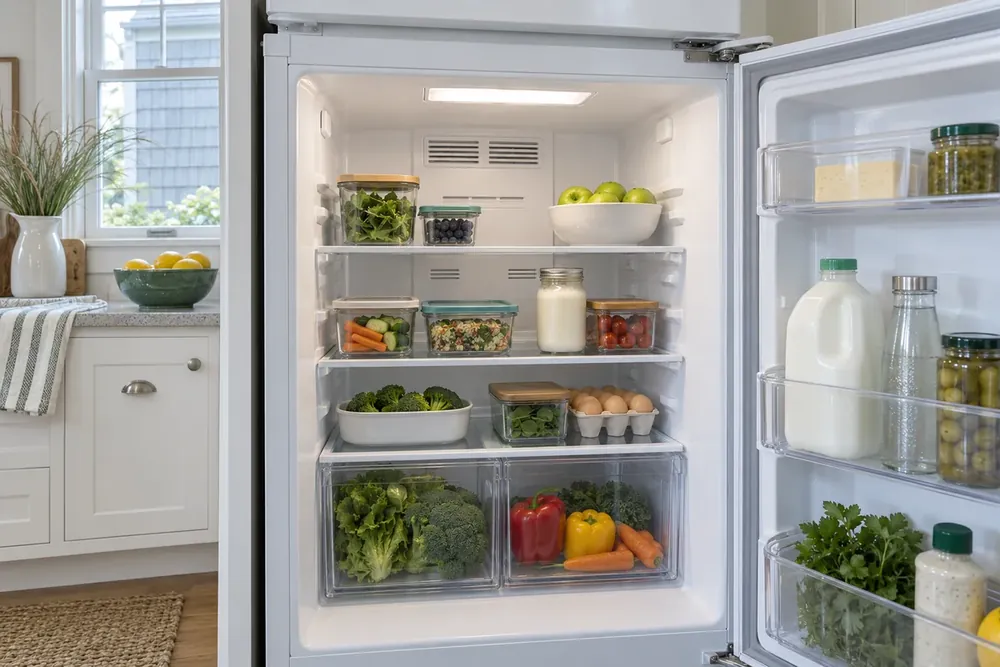
Power and settings are the first visible checks
A refrigerator needs power and an active cooling setting to keep food cold. Call us about lost cooling while checking what you can see; the call does not depend on completing any checks. Reasons for refrigerator not cooling include an interrupted supply, disabled cooling, blocked vents, door leaks, and internal component faults.
Whirlpool's refrigerator troubleshooting guidance identifies power and control settings as possible causes. A lit display shows some power is reaching the appliance, but does not prove the cooling system works.
Safe to try
- Read the temperature setting and any cooling-off or demonstration-mode indicator against the owner's instructions.
- Look at the accessible plug and outlet without pulling the refrigerator away from the wall.
- Observe whether a breaker handle appears tripped, without opening the panel cover or touching wiring.
Call us
- Keep away from a scorched outlet or damaged cord and call us about the fault.
- Stop repeated restart attempts when a breaker trips, and call for an appliance assessment.
- Leave internal electrical tests to your technician and call about a display that works without cooling.
Clear airflow and a closed door support cooling
Interior vents need open space, and the refrigerator door needs to close without a package in the way. Move food away from visible vents and rearrange items that prevent the door closing. Wipe accessible seal residue with a damp cloth; do not remove the seal or door hardware.
Safe to try
- Look for containers pressing against vents or the door.
- Inspect the door seal for crumbs, an obvious tear, or a folded edge without dismantling anything.
Call us
- Call about a torn seal, a door that still will not close, or ice blocking a vent.
- Leave fan covers and other panels installed, and call about cooling that remains poor.
Unusual sounds help describe an internal fault
A new rattle, scrape, or repeated click alongside poor cooling gives your technician useful information. Sound alone cannot identify a failed part: refrigerators also make normal operating noises. Describe whether the sound comes from inside the compartment or near the lower rear, without reaching behind the machine.
Whirlpool identifies fans, compressors, and starting components among possible internal causes of poor cooling. Your technician checks which component is failing. Do not touch fan blades, test a relay, or access refrigerant tubing. Call for diagnosis when unusual noises accompany rising temperatures.
Move food while arranging refrigerator repair
Perishable food needs reliable cold storage as soon as cooling is lost. The USDA Food Safety and Inspection Service recommends keeping refrigerated food at 40°F or below. An unopened refrigerator holds food safely cold for about four hours during a power outage; that estimate is not a waiting period for an appliance that was already warm.
Move food to a working refrigerator or an iced cooler that maintains 40°F or below. FoodSafety.gov guidance says to discard perishables held above 40°F for two hours or more, or one hour if surrounding temperatures exceed 90°F. Never taste food to judge safety. Keep door openings brief while deciding what to transfer.
Call about the refrigerator as you arrange storage. Share any existing temperature reading and when you first noticed the problem; you do not need to obtain a thermometer to start the call.
Internal cooling faults need a technician
Fans, defrost components, and the sealed cooling circuit require diagnosis beyond homeowner checks. Leave covers in place and call for refrigerator repair. A refrigerant problem is never a reason to buy a refill kit.
An appliance repair partner in our network discusses the diagnosis, parts, labor, and total proposed charge before you authorize the repair. Mention whether the freezer is still cold and whether the refrigerator runs continuously or has gone quiet.